

Why Curly Hair Needs Different Care To Straight Hair
At a glance:
- Curly hair’s spiral structure (due to the uneven cuticle pattern) makes it more prone to dryness, frizz and tangling than straight hair.
- Natural oils don’t travel far along curved strands, leaving the mid-lengths and ends under-conditioned.
- Curls react more quickly to humidity, friction and heat, often losing definition faster than straight hair.
- Moisture moves in and out of curly hair more easily, causing structural stress points and moisture loss, leading to expansion, separation and frizz.
- To stay defined and consistent, curls need targeted hydration, cuticle support and controlled moisture balance.
If you’ve ever felt like your curls need constant hydration while straight hair seems to manage with far less, there’s a reason for it.
Curly hair doesn’t behave the same way as straight hair. It coils and curves, changing how the hair holds moisture, how the cuticle sits and how the strand reacts to friction, heat and humidity. The curvature of curly hair creates weak points along the hair shaft where moisture escapes more easily. That’s why curls need more considered care to stay hydrated, smooth and consistent.
Because natural oils don’t travel easily along curved strands, curls have less built-in lubrication and are more prone to dryness, friction and loss of definition.
To care for curls properly, you need to understand how their structure affects everything from moisture to styling.
Curl Structure Changes Hair Behaviour
Curl shape isn’t just cosmetic; it directly affects how your hair behaves.
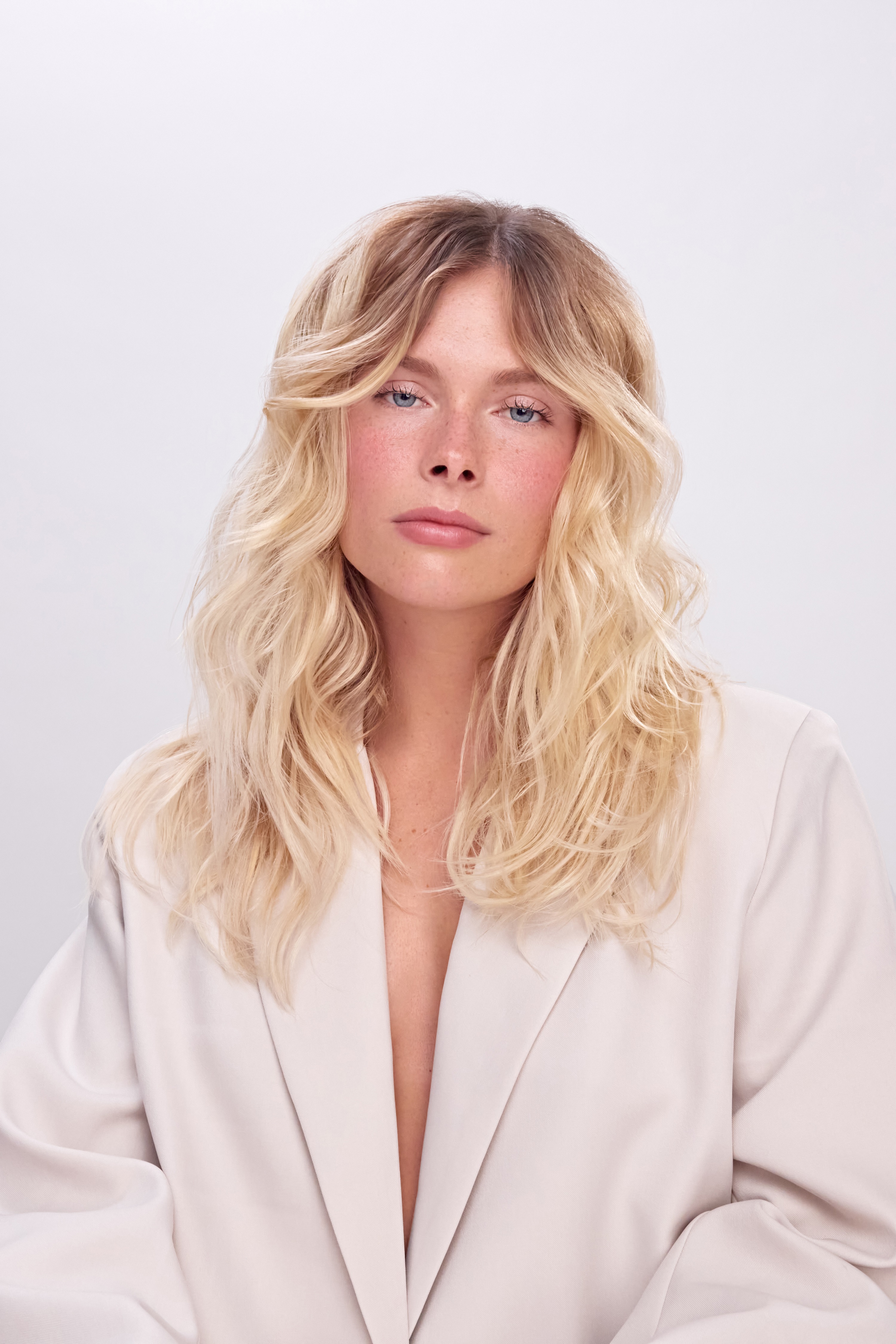
Straight hair grows in a linear pattern, allowing the cuticle to sit flat and remain compact. This structure lets natural oils travel evenly along the strand, maintaining smoothness, shine and a protective layer that helps reduce moisture loss and friction.
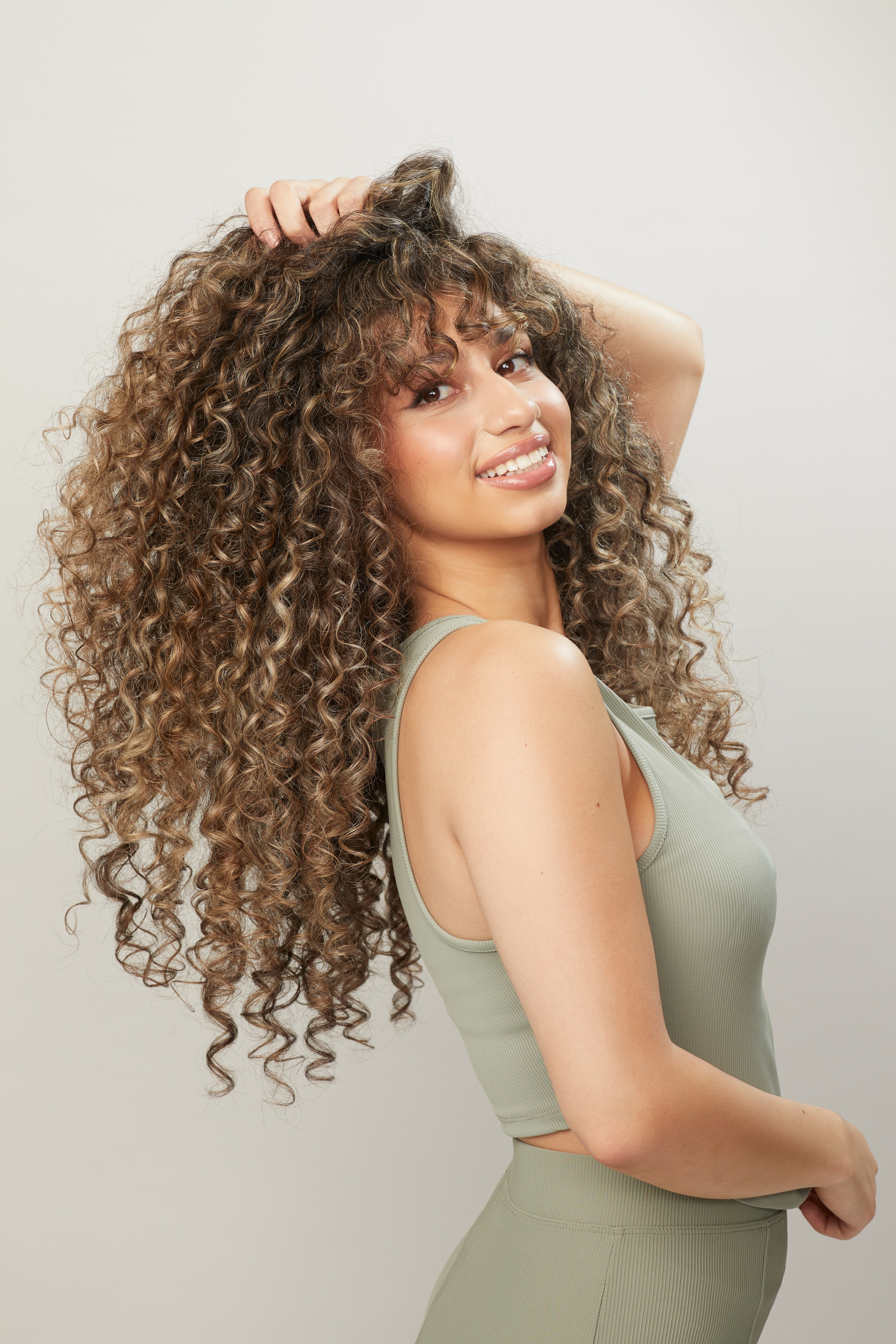
Curly hair, though, grows in a spiral, coil or zigzag formation and that shape changes everything. Each curve creates structural stress points along the hair shaft, where the cuticle becomes uneven and more likely to lift. These irregularities increase porosity, reduce moisture retention and make the hair more reactive to friction, heat and environmental exposure.
This is why routines designed for straight hair fail on curls. They don’t account for porosity or moisture loss.
Natural Oils Struggle to Reach the Ends
Straight hair benefits from even oil distribution. Natural oils travel from the roots to the ends, reinforcing shine, softness and protection.
Curly hair doesn’t have that advantage. Its twists and turns slow the movement of natural oils from the scalp down to the ends, leaving the mid-lengths and tips under-conditioned. This leads to ongoing dryness, reduced elasticity and less-defined curls.
That’s why consistent hydration is essential for curly hair. To support proper moisture retention, use the Bounce Back Sulphate-free Shampoo that cleanses gently without removing essential natural oils.
Follow with the Soft Touch Conditioning Treatment for lasting hydration that helps prevent breakage and improve curl definition.
Humidity Hits Curls Faster and Harder
Straight hair tends to lie flat along the shaft, keeping the cuticle compact and smooth. Because of this, it’s less reactive to humidity and holds its shape more consistently.
Curly hair behaves differently. Its irregular shape means parts of the cuticle sit slightly raised, allowing it to absorb moisture easily. Unfortunately, it also loses moisture fast. This is why curls are more prone to frizz and expansion.
Managing this comes down to moisture balance. The hair needs to maintain internal hydration while limiting the amount of moisture it absorbs from the environment.
This is where leave-in support really helps. The Hydra Curl Leave-in Moisturiser, packed with Organic Australian Macadamia Oil and South American Quinoa Protein, locks in nourishment and maintains hydration while smoothing the cuticle, reducing humidity impact and supporting curl definition.
Curls Tangle More Easily
Curly hair doesn’t glide the way straight hair does. Run your fingers through it, and you’ll notice tangles and resistance along the strand.
That’s because straight hair strands grow in a uniform direction and are less likely to wrap around one another, making brushing and combing relatively simpler.
Curly hair, however, forms coils and bends that naturally interlock. Those curves create points where strands catch and knot, causing tangles. Because curly hair has a raised cuticle layer, it’s more prone to friction and environmental stress, which makes it tangle more easily. Brushing dry curls disrupts their pattern, increasing frizz and breakage.
Detangling curls, therefore, isn’t about force; it’s about technique and control. Always detangle when your curls are wet and coated in conditioner to improve glide. Use your fingers or a wide-tooth comb, starting from the ends and working upward.
These gentle techniques reduce friction, preserve curl definition and help maintain consistent curl formation over time.
Heat Weakens Curl Structure Quickly
Heat can damage all hair types, but curly hair shows the impact faster.
Curly hair reacts to heat differently because of its curved structure. Each curve creates a stress point along the hair fibre. Repeated heat exposure weakens these points, stretching the curl pattern over time. As elasticity drops, curls lose their ability to spring back consistently.
If your curls no longer spring back the way they used to, heat may be the reason.
To maintain curl integrity, limit excessive heat and always apply a heat protectant before styling. Think of it as armour for your hair. CPR Hair’s Heat Defence solution helps seal the hair, creating a physical barrier against moisture loss and protecting the hair from heat styling tools.
Split Ends Disrupt Curl Pattern
Straight and curly hair behave differently when the ends are damaged.
Straight hair falls uniformly, so split ends mainly affect how neat the ends look rather than the overall structure of the hair.
Curly hair forms defined groupings along the strand. When the ends split, these groupings separate, disrupting the shape and creating frizz at the tips. This leaves curls uneven, frizzy and harder to control.
As the cuticle lifts and splits, moisture escapes more easily, leading to increased dryness and breakage.
Split ends don’t repair themselves. Once they appear, they continue to travel up the hair shaft, weakening the fibre along the way.
Regular trims every 8–12 weeks help maintain curl shape and prevent further damage.
Curly Hair Needs Ongoing Hydration and Structure Support
Straight hair responds well to lightweight smoothing products focused primarily on shine and smoothness. Because moisture is distributed more evenly along the strand, simpler formulas may suffice.
Curly hair requires more specialised care. It relies on consistent hydration and cuticle support to maintain definition and elasticity. Without it, hair fibres expand unpredictably and feel dry even after styling.
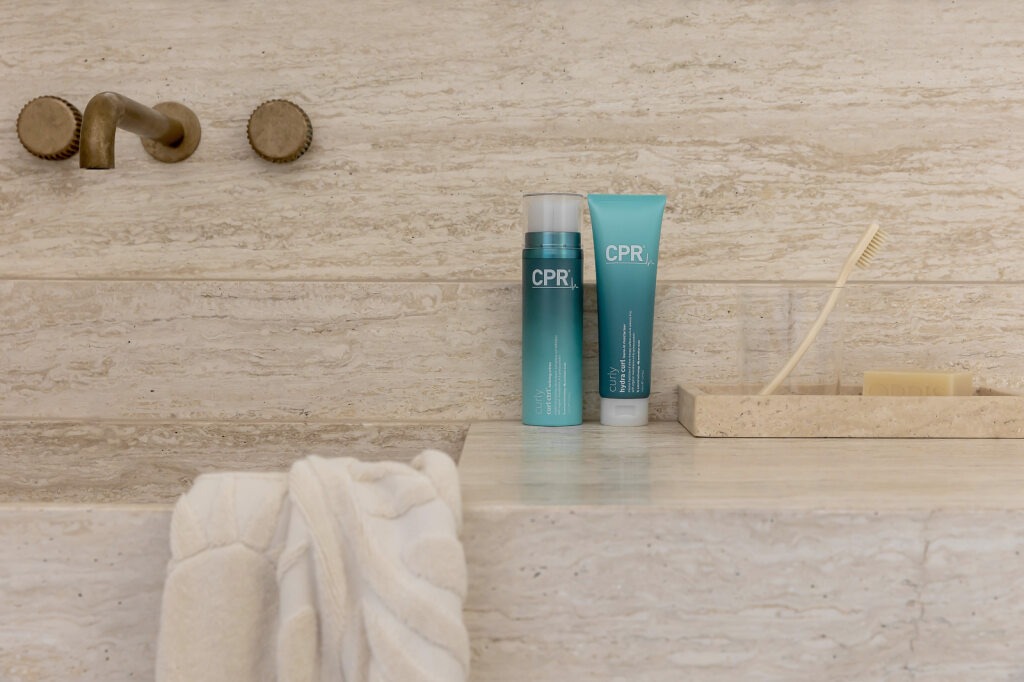
This is where high-performance formulas such as CPR Hair’s The Curly Solution make a difference. This range infuses the perfect balance of botanical proteins, moisture, vitamins and minerals to maintain moisture balance within the fibre, support curl formation and reduce friction across the hair surface.
From cleansing to defining cream and revitalising spray, each step supports long-lasting curl shape and control.
Curly hair requires different care because its structure, moisture retention and response to styling are fundamentally different from those of straight hair. Its coils make it more prone to dryness, frizz and tangling, which is why hydration, gentle handling and targeted support matter more.
Healthy, defined curls aren’t achieved by following generic routines. They’re achieved by understanding how your hair behaves and supporting it accordingly.
Explore the CPR Curly Solution range to build a routine that works with your curls. Backed by over 60 years of expertise and made in Australia, each formula is crafted with hand-selected natural technology ingredients to support hydration, definition and long-term curl performance.
FAQs
Why does curly hair get dry easily?
Curly hair dries out faster because its spiral shape limits how natural oils move down the strand. This leaves the mid-lengths and ends under-conditioned, making consistent hydration essential for softness, elasticity and definition.
Can I use the same products for curly and straight hair?
Not effectively. Straight hair can thrive on lighter formulas, while curly hair needs moisture-focused products that support structure and definition. Using curl-specific products helps maintain hydration and reduce frizz.
How can I keep my curls from becoming frizzy?
Focus on maintaining moisture balance and protecting the cuticle. Apply a leave-in moisturiser on damp hair, avoid excessive handling once dry and use products that help retain hydration and support consistent curl definition.